Lube Oil Encyclopedia
What is Lube Oil ?
Lube oil is a specialized fluid used to reduce friction, wear, and heat between mechanical components that are in motion relative to each other. It forms a thin, protective film on the surfaces of parts like engines, gearboxes, and bearings, enabling smoother movement and reducing the chances of damage due to friction or contact.
Lube oil is typically composed of:
- Base Oil: The base oil constitutes 70-99% of the lube oil. Which can be mineral oil (derived from crude oil), synthetic oil (chemically engineered), or a blend of both.
- Additives: Chemical compounds added to enhance the performance of the base oil. These include anti-wear agents, detergents, dispersants, antioxidants, viscosity modifiers, and more.
Classification of Lube Oil
SAE Viscosity Grades
It refers to the classification system for Lube oils defined by the Society of Automotive Engineers (SAE), primarily based on their viscosity characteristics. These grades help users select the appropriate oil for different operating conditions and temperatures. Mainly Lube oils are classified in two SAE Viscosity Grade:
- Single-Grade Oils: Labelled as SAE 10, 20, 30, etc., these oils maintain a consistent viscosity at a specified temperature. They are typically used in stable temperature environments.
- Multi-Grade Oils: Labelled as SAE 5W-30, 10W-40, etc., these oils have viscosity modifiers that allow them to perform well across a range of temperatures. The first number (e.g., "5W") indicates the oil's viscosity in cold conditions (W stands for winter), while the second number (e.g., "30") indicates viscosity at high operating temperatures.
API Service Categories
IT refers to classifications defined by the American Petroleum Institute (API) that indicate the performance standards of Lubricating oils, which helps to select the Lube oil according to required performance by vehicle or machinery in which oil is to be used. For example, Lube oils can be classified as below API Categories:
- API Service Categories for Gasoline Engines (S Category)
- API Service Categories for Diesel Engines (C Category)
- API Service Categories for Gear Oils (G Category)
Types of Lube Base Oil ?
API (American Petroleum Institute) has classified Base Oil in 5 Groups – Group I, II, III, IV, V according to their purity levels.
| API Group | Refining Process | Viscosity Index | Sulphur Content | Saturation | Applications |
|---|---|---|---|---|---|
|
Group I |
Solvent-Refined |
80-120 |
> 0.03% |
< 90% |
General-Purpose Lubricants, Older Engines, Industrial Oils |
|
Group II |
Hydrotreated or Hydrocracked |
80-120 |
< 0.03% |
> 90% |
Modern Engine Oils, Industrial Oils |
|
Group III |
Severely Hydrocracked / Hydro Isomerized |
> 120 |
< 0.03% |
> 90% |
High-Performance Lubricants, Often Marketed as Synthetic |
|
Group IV |
Polyalphaolefins (PAOs) |
> 130 |
NA |
Nearly 100% |
High-Performance Synthetic Lubricants |
|
Group V |
Non-Standard Oils (e.g., Esters, PAGs) |
Varies Widely |
Varies |
Varies |
Specialized Applications, Biodegradable Oils, Fire-Resistant Fluids |
General Properties of Lube Oils
1. Color
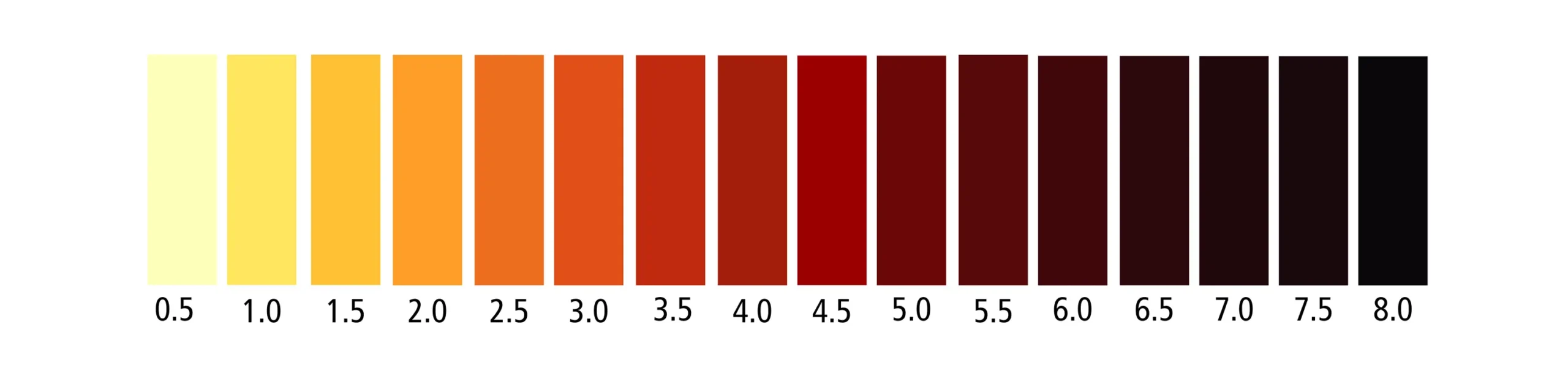
The color of base oil refers to its visual appearance, the color of base oil can range from water white to yellow or even darker shades, depending on its refining process and purity level.
ASTM Test Method: D1500
2. Density
Density is the mass of base oil per unit volume, usually expressed in kilograms per Liter (kg/L) or grams per cubic centimeter (g/cm³). Density is usually measured at a standard temperature of 15°C.
ASTM Test Method: D1298
3. Flash Point
The flash point is the lowest temperature at which the vapors of the oil can ignite momentarily in the presence of an open flame.
ASTM Test Method: D92
4. Viscosity
Viscosity is the measure of a fluid’s resistance to flow. In the context of lube oils, it indicates how thick or thin the oil is at a given temperature. Base stocks are primarily manufactured and sold according to their viscosities at either 40°C or 100°C.
ASTM Test Method: D445
5. Viscosity Index
The viscosity index is a dimensionless number that indicates the change in viscosity of a lube oil with temperature. A higher VI means the oil’s viscosity is less affected by temperature changes, ensuring consistent lubrication performance across a wide range of temperatures.
ASTM Test Method: D2270
6. Pour Point
The pour point measures the highest temperature at which a base stock no longer flows.
ASTM Test Method: D97
7. Cloud Point
The cloud point is the temperature at which wax crystals first form as a cloud of microcrystals.
ASTM Test Method: D2500
8. Aniline Point
The aniline point is the lowest temperature at which an equal volume of aniline and lube oil are completely miscible (able to mix). It is an indicator of the oil’s aromatic content and solvency.
ASTM Test Method: D611
9. Sulfur Content
Sulfur content is the amount of sulfur present in the lube oil, usually measured as a percentage by weight. Low sulfur content is preferred for better oxidation stability and reduced emissions.
ASTM Test Method: D4951
Type General Additives for Lube Oils
Lubricant additives are essential chemical compounds blended with base oils to enhance the performance, longevity, and protective qualities of lubricants. Here are some of the most common types of lubricant additives:
1. Viscosity Index Improvers (VIIs)
These additives help maintain the lubricant’s viscosity across a wide range of temperatures, ensuring it remains effective whether the equipment is operating in extreme cold or hot weather condition. It prevents the lubricant from becoming too thin at high temperatures or too thick at low temperatures, providing consistent protection and performance.
Example: Polyisobutylene
2. Anti-Wear Agents
These additives form a protective film on metal surfaces, reducing wear and tear on engine components and other moving parts. It extends the life of machinery by minimizing metal-to-metal contact and reducing friction.
Example: Zinc Dialkyldithiophosphate (ZDDP)
3. Detergents
Detergents clean and neutralize deposits, preventing the build-up of sludge and varnish in engines. It keeps engines clean, enhancing their efficiency and reducing the risk of damage caused by contaminants.
Example: Calcium Sulfonate
4. Dispersants
Dispersants keep contaminants, such as soot and dirt, suspended in the oil, preventing them from clumping together and forming harmful deposits. It ensures a clean engine by preventing sludge formation and maintaining the oil’s ability to flow freely.
Example: Polyisobutylene Succinimide
5. TBN (Total Base Number) Booster
A TBN (Total Base Number) booster additive is a specialized chemical added to lubricant oils to increase their alkalinity, measured as TBN. The TBN of an oil is a critical indicator of its ability to neutralize acidic byproducts that are formed during the combustion process in engines. These acids can be harmful to engine components, leading to corrosion, wear, and reduced engine life.
Example: Overbased Calcium Sulfonate
6. Corrosion and Rust Inhibitors
These additives protect metal surfaces from corrosion and rust by forming a protective barrier. It prolongs the life of engine components, especially in harsh environments or when the equipment is not used regularly.
Example: Amine Phosphates
7. Anti-Oxidants
Anti-oxidants slow down the oxidation process, which can cause oil to thicken and lose its lubricating properties over time. It extends the life of the lubricant and improves its performance under high-temperature conditions.
Example: Phenolic Antioxidants
8. Friction Modifiers
Friction modifiers reduce friction between moving parts, improving fuel efficiency and reducing wear. It enhances the smooth operation of engines and machinery, contributing to energy savings.
Example: Molybdenum Disulfide (MoS2)
9. Anti-Foaming Agents
These additives prevent the formation of foam in the lubricant, it ensures consistent lubrication by maintaining the lubricant’s ability to form a continuous film on surfaces.
Example: Polydimethylsiloxane (PDMS)
10. Extreme Pressure (EP) Additives
EP additives provide additional protection under high-load conditions by forming a protective film that prevents welding and scuffing of metal surfaces. It protects gears and bearings from extreme pressure, especially in heavy-duty applications.
Example: Sulfurized Olefins
11. Pour Point Depressants
These additives lower the pour point temperature. It ensures that the lubricant remains fluid in cold conditions, providing reliable protection during start-up.
Example: Ethylene-Vinyl Acetate (EVA) Copolymers
12. Seal Conditioners
Seal conditioners prevent seals from hardening or shrinking, which can lead to leaks. It extends the life of seals and prevents oil leaks, maintaining the integrity of the lubricant system.
Example: Esters